Australia's men's national basketball team。the Boomers, finished fourth at the 2020 Tokyo Olympics. That's the fact that should anchor any conversation about Australian Men's Basketball. Not the FIBA World Cup disappointments, not the occasional roster turmoil. A bronze-medal game loss to Slovenia stung, sure, but it marked the first time the Boomers had reached an Olympic semi-final. Patty Mills carried the scoring load, averaging 23.3 points per game, and the team's defensive rotations finally looked coherent under Brian Goorjian. If you're new to following the Boomers, start there—the Tokyo run is the clearest proof that Australian Men's Basketball can compete with the global elite.Watching the NBL is the smartest entry point. The league runs from October to March。and its import rules force local guards to handle pressure. LaMelo Ball's brief stint with the Illawarra Hawks in 2019-20 wasn't just a curiosity—it showed that NBL clubs can develop young talent while staying competitive. For Australian Men's Basketball fans, the NBL provides a weekly look at future Boomers like Josh Giddey (before he left for the NBA) and current role players. Ticket prices are reasonable, streaming is accessible via ESPN in the US and Kayo in Australia, and the physical style mirrors what you'll see in FIBA games. My advice: pick a team like the Perth Wildcats or Melbourne United and watch five games. You'll start recognizing the defensive schemes that Goorjian uses with the national team.
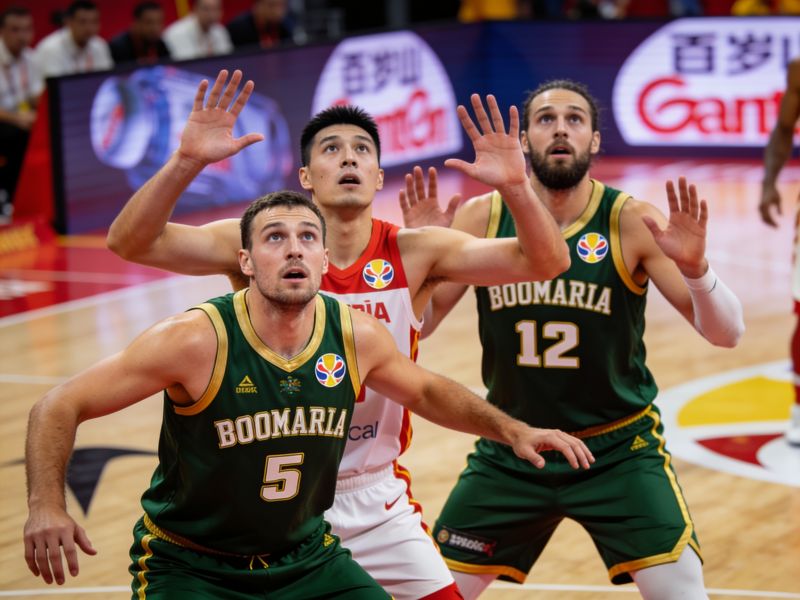
Roster construction is where Australian Men's Basketball gets tricky. The Boomers have NBA talent—Mills, Joe Ingles, Matisse Thybulle。Josh Green—but availability is never guaranteed. FIBA windows fall during the NBA season, so the roster often features NBL standouts and European pros. That's not a weakness;it's a reality of international basketball. In the 2023 World Cup qualifiers, coach Goorjian leaned on guys like Mitch Creek and Nathan Sobey, and they delivered gritty wins over Iran and Kazakhstan. The lesson for fans: don't expect a full-strength Boomers squad every window. Check the schedule, note which NBA players are committed, and adjust expectations. When the full roster does assemble—like at the 2024 Paris Olympics—the team's ceiling is a medal.Defense is the Boomers' identity。and it starts with ball pressure. Mills and Thybulle are elite on-ball defenders, but the system relies on weak-side rotations that require practice. In Tokyo, Australia held opponents to 41.2% shooting from the field, third-best in the tournament. That didn't happen by accident. Goorjian drilled closeouts and help rotations for weeks. If you're studying Australian Men's Basketball, clip those defensive possessions. Watch how Ingles communicates screens, how Jock Landale hedges on pick-and-rolls. It's not glamorous, but it's replicable at any level. I've used the Boomers' shell drill with a local under-16 team, and the improvement in defensive communication was immediate.The next major test is the 2025 FIBA Asia Cup and beyond. Australia has dominated that competition—two gold medals in 2017 and 2022—but the rest of Asia is catching up. Japan's rise, led by NBA players, makes the 2025 tournament less predictable. For followers of Australian Men's Basketball, the key is to track the development of young guards like Tyrese Proctor and Alex Ducas. Both have NBA potential。
and their progress will determine whether the Boomers can maintain their defensive intensity after Mills and Ingles retire. Set a reminder for the Asia Cup draw. Watch the NBL season closely. The Boomers aren't a team you check in on every four years—they're a program worth following year-round.